Tool discovery

What type of AI tool
are you looking for?

Search the active catalog with LambdaBase AI Search, or keep browsing the popularity-ordered directory below.

Submitted search queries and interaction metrics may be analyzed to improve result quality. Do not include personal or confidential information

Browse popular tools.

Screenshot of KlavAudit Pro
KlavAudit Pro
AI/ML Unknown

KlavAudit Pro is a web-based tool designed to help e-commerce businesses using Klaviyo identify revenue gaps quickly. By connecting to a Klaviyo account, the tool analyzes email marketing performance data to surface missed revenue opportunities, such as underperforming flows, poor segmentation, or abandoned cart issues. The audit is claimed to complete in 60 seconds, providing users with an immediate overview of where revenue is leaking. The tool focuses on actionable insights rather than raw analytics, translating complex Klaviyo data into a prioritized list of gaps that could be costing the business sales. It is aimed at non-technical users who rely on Klaviyo for email marketing but lack the time or expertise to manually audit their account. The exact methodology and depth of analysis are not publicly documented, but the promise of a rapid audit suggests an automated, heuristic-based approach. KlavAudit Pro likely requires read-only access to the Klaviyo account via API credentials. The tool does not provide a public pricing page or detailed feature list, and its official website is not clearly identified, making it difficult to assess its reliability or track record. Potential users should exercise caution and verify the tool’s security practices before granting access to marketing data.

Solves

Many e-commerce businesses use Klaviyo for email marketing but struggle to identify why their campaigns underperform. KlavAudit Pro addresses this by providing a fast, automated audit that reveals specific revenue gaps, such as missed opportunities in flows, segmentation errors, or deliverability issues, without requiring manual analysis.

Screenshot of We and AI
We and AI
AI/ML Freemium

Notis is an AI personal assistant that lives in messaging channels like WhatsApp, iMessage, Telegram, Slack, and email. Users can send a voice note, forward an email, share a photo, or text a request, and Notis converts it into finished work across over 1,000 supported apps, including Gmail, Google Calendar, Notion, and Slack. It is designed to feel like delegating to a human intern, handling follow-ups and reminders without requiring the user to switch between dashboards or install additional software. The service is trusted by more than 17,000 founders and operates on a freemium model. Notis supports multiple channels and also offers a desktop app, web app, and CLI. It can execute tasks like turning voice notes into structured notes, sending payment reminders, scheduling follow-ups, and updating trackers. The platform emphasizes natural language understanding and asynchronous delegation, making it suitable for busy professionals and small teams who want to reduce administrative overhead. Its integration ecosystem spans popular productivity and business tools, enabling cross-app automation without building custom workflows.

Solves

Notis solves the problem of juggling multiple apps and manual administrative tasks by letting users delegate work via messaging channels. It understands natural language requests, performs actions across connected apps, and follows up automatically, reducing context switching and forgotten tasks.

Screenshot of Polar
Polar
AI/ML Unknown

Polar is an open-source monetization platform designed to help developers generate revenue from their open-source projects. It provides tools and infrastructure to manage subscriptions, donations, and other funding models directly tied to development work. The platform aims to address the sustainability gap in open-source software by enabling maintainers to receive financial support from users and organizations. By focusing on developer-centric workflows, Polar streamlines the process of setting up and managing funding campaigns. Because Polar is open source, users can inspect the code, contribute improvements, or self-host the platform to meet specific requirements. This flexibility makes it suitable for developers who want control over their monetization stack.

Solves

Polar addresses the challenge of sustainably funding open-source software by providing a dedicated monetization platform for developers. It centralizes subscription, donation, and other revenue mechanisms, reducing the overhead for maintainers to receive financial support.

Screenshot of SciFigureAI
SciFigureAI
Code Freemium

SciFigureAI is an AI-powered scientific figure maker designed to help researchers turn ideas, paper abstracts, mechanism descriptions, or rough sketches into clean figure drafts for papers, posters, grants, and slides. Users can start from text prompts, uploaded sketches, or existing images. The AI generates a draft figure that can be iteratively refined through follow-up prompts within a project workspace. The platform supports multiple input modalities: Text to Figure interprets written descriptions of workflows or mechanisms; Sketch to Figure takes a rough drawing and transforms it into a polished visual; Edit Image allows users to revise composition and details of generated or uploaded images. Export options include free previews and credit-based downloads to PPTX and SVG formats, enabling integration into presentations and further editing. The tool is built for fast visual exploration and researcher review, with a workflow that mirrors the scientific communication process from concept to publishable figure. Inspiration examples showcase graphical abstracts, mechanism diagrams, protocol workflows, and structure figures across disciplines like immunology, oncology, cell biology, and materials science.

Solves

Researchers across disciplines face the challenge of creating publication-quality scientific figures from their ideas, which often requires significant time and design expertise. SciFigureAI solves this by using generative AI to automatically produce figure drafts from natural language descriptions or rough sketches, dramatically accelerating the visual communication of research findings and reducing reliance on graphic design skills.

Screenshot of MangaFusion
MangaFusion
Image Gen Freemium

MangaFusion is an AI-powered application designed to translate text in manga images instantly. It applies optical character recognition (OCR) and machine translation to detect and convert dialogue, sound effects, and other text within manga panels into user-selected languages. The tool outputs translated images that retain the original art style and layout. The service operates on a freemium model, allowing users to access basic translation features at no cost while offering advanced capabilities through paid plans. It is positioned within the image generation category, suggesting it may also include features for image enhancement or editing beyond translation. Because the provided homepage URL redirects to Wondershare Repairit, a data recovery tool, detailed specifications for MangaFusion are not available from the provided source. Evaluations should treat the following metadata as derived solely from the brief product description.

Solves

MangaFusion solves the problem of language barriers for manga readers by automatically translating text embedded in manga images, eliminating manual retyping or overlay editing.

Screenshot of Microlaunch
Microlaunch
Code Unknown

Microlaunch is a platform designed to help makers and founders launch their products or ideas quickly and collect feedback from a community of peers and potential users. It focuses on early-stage validation, enabling users to share a concise pitch or landing page and receive structured comments, ratings, and suggestions. The tool is aimed at anyone building software or digital products, from solo developers to small startups. By providing a space to test concepts before full development, Microlaunch helps reduce the risk of building products that do not meet market needs. While specific features beyond the core launch-and-feedback loop are not detailed in the available Product Hunt listing, the platform appears to prioritize simplicity and community engagement. Users can likely post their idea, monitor feedback, and iterate based on community response.

Solves

Microlaunch solves the challenge of validating product ideas and gathering early user feedback without an existing audience. It gives makers a low-friction way to share their concepts and receive constructive input, helping them refine their product before investing significant time and resources.

Screenshot of deco.cx 2.0
deco.cx 2.0
AI/ML Unknown

deco.cx 2.0 is a web development tool that promises to accelerate building web applications by up to 10 times. It combines Deno, a secure runtime for JavaScript and TypeScript, with JSX syntax for component-based UI, TypeScript for static typing, and Tailwind CSS for rapid, utility-first styling. This integrated stack reduces the need for separate configuration and lets developers write modern, type-safe frontend code quickly. The tool appears to be offered as a platform, where users can develop, preview, and deploy web apps. By standardizing on Deno and JSX, it provides a consistent environment that minimizes context switching between different frameworks and build tools. The inclusion of Tailwind CSS further speeds up styling by enabling developers to apply design tokens directly in markup without writing custom CSS. deco.cx 2.0 is aimed at developers who want a streamlined path from idea to production. It may be particularly useful for teams building marketing sites, e-commerce frontends, or internal tools that require fast iteration and high performance. The focus on Deno suggests edge deployment and modern server-side rendering capabilities, though specifics are not detailed in the source material. Overall, the tool differentiates itself by bundling a modern, opinionated stack that emphasizes developer velocity, type safety, and clean styling, allowing small teams to ship web applications more efficiently than with traditional setups.

Solves

deco.cx 2.0 solves the problem of slow and complex web development by providing a unified stack of Deno, JSX, TypeScript, and Tailwind, enabling developers to build type-safe, styled web apps faster without managing extensive tooling configuration.

Screenshot of deco.cx 2.0
deco.cx 2.0
AI/ML Unknown

deco.cx 2.0 is a web development tool that promises to accelerate building web applications by up to 10 times. It combines Deno, a secure runtime for JavaScript and TypeScript, with JSX syntax for component-based UI, TypeScript for static typing, and Tailwind CSS for rapid, utility-first styling. This integrated stack reduces the need for separate configuration and lets developers write modern, type-safe frontend code quickly. The tool appears to be offered as a platform, where users can develop, preview, and deploy web apps. By standardizing on Deno and JSX, it provides a consistent environment that minimizes context switching between different frameworks and build tools. The inclusion of Tailwind CSS further speeds up styling by enabling developers to apply design tokens directly in markup without writing custom CSS. deco.cx 2.0 is aimed at developers who want a streamlined path from idea to production. It may be particularly useful for teams building marketing sites, e-commerce frontends, or internal tools that require fast iteration and high performance. The focus on Deno suggests edge deployment and modern server-side rendering capabilities, though specifics are not detailed in the source material. Overall, the tool differentiates itself by bundling a modern, opinionated stack that emphasizes developer velocity, type safety, and clean styling, allowing small teams to ship web applications more efficiently than with traditional setups.

Solves

deco.cx 2.0 solves the problem of slow and complex web development by providing a unified stack of Deno, JSX, TypeScript, and Tailwind, enabling developers to build type-safe, styled web apps faster without managing extensive tooling configuration.

Screenshot of EzUGC - On-brand image and video ads in minutes.

EzUGC is an AI-powered content generation platform designed to create on-brand, user-generated content (UGC) style image and video ads in minutes. Users start by writing a script or description for their ad, then select from a library of AI avatars that represent diverse demographics and styles relevant to their brand. The platform’s proprietary models, including NewGPT Image 2 for image generation and Seedance 2.0 for video generation, produce high-quality, realistic visuals that mimic authentic customer testimonials and product showcases. The generated videos typically take around 2 minutes to render and feature natural pacing, engaging hooks, and native social media aesthetics. EzUGC is optimized for direct-to-consumer (DTC) brands that need to rapidly create and test multiple ad variations across platforms like TikTok, Instagram, and Facebook. The tool also provides performance analytics and revenue attribution, allowing marketers to track views, conversions, and revenue generated by each ad. With a growing library of templates, avatars, and stylistic options, EzUGC enables teams to maintain brand consistency while scaling their creative output. The platform has been trusted by over 50 DTC brands and claims to have contributed to over $25 million in attributable revenue.

Solves

DTC brands and e-commerce marketers often struggle to produce authentic, high-converting UGC-style ads at scale. Traditional methods require hiring content creators, managing shoots, and waiting for edits, which is costly and slow. EzUGC solves this by providing an AI-driven solution that generates realistic, on-brand video and image ads in minutes. This allows teams to quickly iterate on creatives, test multiple angles, and optimize ad spend without the overhead of traditional production.

Screenshot of Lingo.dev
Lingo.dev
AI/ML Unknown

Lingo.dev is an AI-powered localization platform that helps developers translate software applications into multiple languages quickly. It automates the translation of UI strings, notifications, and other text content, reducing the need for manual translation and file management. The service is designed to integrate with modern development workflows, supporting continuous localization for web and mobile apps. With Lingo.dev, teams can connect their code repositories or upload source language files, and the platform uses machine learning models to generate context-aware translations. It typically offers options for glossaries, translation memory, and review workflows to maintain consistency and quality across languages. The tool aims to eliminate the friction of traditional localization processes, enabling faster global releases. Lingo.dev positions itself as a developer-first solution, providing API and CLI access that allows automation in CI/CD pipelines. By embedding translation directly into the development lifecycle, it reduces time-to-market for international products and supports teams of all sizes in reaching global audiences.

Solves

Manual localization is slow, error-prone, and requires significant coordination between developers and translators. Lingo.dev automates the translation and synchronization of app content, enabling teams to ship multilingual versions with minimal overhead.

Screenshot of Lingo.dev
Lingo.dev
AI/ML Unknown

Lingo.dev is an AI-powered localization platform that helps developers translate software applications into multiple languages quickly. It automates the translation of UI strings, notifications, and other text content, reducing the need for manual translation and file management. The service is designed to integrate with modern development workflows, supporting continuous localization for web and mobile apps. With Lingo.dev, teams can connect their code repositories or upload source language files, and the platform uses machine learning models to generate context-aware translations. It typically offers options for glossaries, translation memory, and review workflows to maintain consistency and quality across languages. The tool aims to eliminate the friction of traditional localization processes, enabling faster global releases. Lingo.dev positions itself as a developer-first solution, providing API and CLI access that allows automation in CI/CD pipelines. By embedding translation directly into the development lifecycle, it reduces time-to-market for international products and supports teams of all sizes in reaching global audiences.

Solves

Manual localization is slow, error-prone, and requires significant coordination between developers and translators. Lingo.dev automates the translation and synchronization of app content, enabling teams to ship multilingual versions with minimal overhead.

Screenshot of Fundraisly
Fundraisly
AI Agents Unknown

Fundraisly is an AI-powered fundraising agent that helps startups find investors and book meetings. It automates the process of identifying potential investors by matching companies with relevant venture capitalists, angel investors, and funds based on criteria such as industry, stage, and funding needs. The agent handles the scheduling of meetings directly, reducing the manual effort of outreach and follow-up. This allows founders to spend more time on product development and pitching rather than administrative tasks. While detailed technical specifications and pricing are not publicly documented, Fundraisly targets early-stage and growth-stage companies seeking capital, as well as business users involved in fundraising. Its core value is to streamline investor sourcing and meeting coordination.

Solves

Fundraisly solves the time-intensive and manual problem of investor discovery and outreach. It automates finding relevant investors and booking meetings, allowing founders to accelerate their fundraising efforts without dedicating extensive time to list-building and scheduling.

Screenshot of Agentplace
Agentplace
AI Agents Unknown

Agentplace is a platform described as enabling the creation of interactive AI websites and applications. It is categorized under AI Agents, indicating a focus on integrating conversational or task-oriented AI agents into user-facing web and app interfaces. The product listing highlights its role as a dedicated environment for building interactive experiences that combine website/app functionality with AI-driven interactions. The platform appears to target creators who want to deploy AI-powered sites without assembling separate AI, backend, and frontend components. While detailed technical documentation and pricing are not publicly provided in the given sources, Agentplace positions itself as a solution for building and potentially hosting interactive AI apps. Its feature set likely includes tools for designing interfaces, configuring AI behaviors, and publishing sites, though specifics should be verified with the vendor.

Solves

Agentplace addresses the difficulty of building interactive AI websites and apps by providing a single platform where creators can combine web/app design with AI agent capabilities, reducing the need for separate AI integration and deployment workflows.

Screenshot of Scade.pro
Scade.pro
AI/ML Unknown

Scade.pro is a no-code platform for building and deploying AI-powered applications and workflows. It provides a visual interface that allows users to connect AI models, data sources, and external services without writing code, lowering the barrier to entry for creating AI-driven solutions. The platform focuses on converting AI into revenue, engagement, and new projects by offering features for workflow automation, chatbot creation, and API generation. Users can prototype and launch AI solutions quickly, then share or monetize them. Scade.pro supports integration with popular AI models and third-party services, enabling diverse use cases from customer support to content generation. While detailed technical specifications and pricing are not extensively documented in public sources, Scade.pro targets business users, developers, and startups seeking practical AI applications. Its emphasis on no-code development and monetization makes it a candidate for quickly testing AI product ideas and automating business processes.

Solves

Scade.pro solves the technical complexity and high development cost of building AI applications by providing a no-code environment that streamlines model integration, workflow orchestration, and deployment. It enables non-technical users to create, automate, and monetize AI solutions without needing deep programming or machine learning expertise.

Screenshot of Bubble for native mobile apps (beta)

Bubble is a leading no-code platform that enables users to build web applications through a visual drag-and-drop interface. Its native mobile app builder, currently in beta, extends this capability to creating iOS and Android applications without writing code. Users can design mobile interfaces, define logic and workflows, and connect to data sources using the same visual programming environment as Bubble's web app builder. The native mobile app beta allows users to compile their Bubble applications into native mobile apps, providing access to device features such as camera, GPS, push notifications, and offline functionality. This enables creators to deliver app store-ready products while maintaining a single codebase for web and mobile. The beta phase means some features may be incomplete or subject to change, but it represents a significant step toward Bubble's goal of being a comprehensive no-code development environment. Bubble's mobile app builder is particularly suited for startups, entrepreneurs, and businesses looking to quickly launch mobile apps without the cost and complexity of hiring native developers. It supports rapid iteration and prototyping, making it ideal for validating app ideas and building MVPs. Integration with Bubble's backend and database services allows seamless data synchronization across platforms. The tool is accessible to non-technical users while still offering advanced capabilities for those with some technical background. While in beta, it may have limitations compared to mature alternatives, but it benefits from Bubble's extensive ecosystem, plugins, and community.

Solves

Bubble for native mobile apps solves the challenge of building and deploying native iOS and Android applications without needing to code in Swift, Kotlin, or React Native. It enables users to visually design mobile interfaces and logic, drastically reducing development time and cost, and allowing non-technical founders and businesses to bring mobile apps to market quickly.

Screenshot of Bubble for native mobile apps (beta)

Bubble is a leading no-code platform that enables users to build web applications through a visual drag-and-drop interface. Its native mobile app builder, currently in beta, extends this capability to creating iOS and Android applications without writing code. Users can design mobile interfaces, define logic and workflows, and connect to data sources using the same visual programming environment as Bubble's web app builder. The native mobile app beta allows users to compile their Bubble applications into native mobile apps, providing access to device features such as camera, GPS, push notifications, and offline functionality. This enables creators to deliver app store-ready products while maintaining a single codebase for web and mobile. The beta phase means some features may be incomplete or subject to change, but it represents a significant step toward Bubble's goal of being a comprehensive no-code development environment. Bubble's mobile app builder is particularly suited for startups, entrepreneurs, and businesses looking to quickly launch mobile apps without the cost and complexity of hiring native developers. It supports rapid iteration and prototyping, making it ideal for validating app ideas and building MVPs. Integration with Bubble's backend and database services allows seamless data synchronization across platforms. The tool is accessible to non-technical users while still offering advanced capabilities for those with some technical background. While in beta, it may have limitations compared to mature alternatives, but it benefits from Bubble's extensive ecosystem, plugins, and community.

Solves

Bubble for native mobile apps solves the challenge of building and deploying native iOS and Android applications without needing to code in Swift, Kotlin, or React Native. It enables users to visually design mobile interfaces and logic, drastically reducing development time and cost, and allowing non-technical founders and businesses to bring mobile apps to market quickly.

Screenshot of Scade.pro
Scade.pro
AI/ML Unknown

Scade.pro is a no-code platform for building and deploying AI-powered applications and workflows. It provides a visual interface that allows users to connect AI models, data sources, and external services without writing code, lowering the barrier to entry for creating AI-driven solutions. The platform focuses on converting AI into revenue, engagement, and new projects by offering features for workflow automation, chatbot creation, and API generation. Users can prototype and launch AI solutions quickly, then share or monetize them. Scade.pro supports integration with popular AI models and third-party services, enabling diverse use cases from customer support to content generation. While detailed technical specifications and pricing are not extensively documented in public sources, Scade.pro targets business users, developers, and startups seeking practical AI applications. Its emphasis on no-code development and monetization makes it a candidate for quickly testing AI product ideas and automating business processes.

Solves

Scade.pro solves the technical complexity and high development cost of building AI applications by providing a no-code environment that streamlines model integration, workflow orchestration, and deployment. It enables non-technical users to create, automate, and monetize AI solutions without needing deep programming or machine learning expertise.

Screenshot of Startups Leaderboards
Startups Leaderboards
AI/ML Unknown

Startups Leaderboards is a Product Hunt listing categorized under AI/ML. Its listed description is limited to the question "Can you make $1,000?", suggesting a possible challenge or milestone-based concept for startups. The product's homepage currently shows a Cloudflare challenge page ("Just a moment..."), which prevents automated access to detailed product information. Due to the lack of accessible documentation or GitHub repository, specifics about features, pricing, target users, and technical implementation remain unknown. The listing's presence on Product Hunt indicates it is intended for public discovery, but without further verification, its exact functionality cannot be confirmed.

Solves

The precise problem solved by Startups Leaderboards is not clearly documented in available sources. Based solely on its Product Hunt listing, it appears to be positioned around a $1,000 earning challenge, possibly related to startup revenue or performance milestones. However, without access to the actual product, its exact value proposition cannot be confirmed.

Screenshot of Startups Leaderboards
Startups Leaderboards
AI/ML Unknown

Startups Leaderboards is a Product Hunt listing categorized under AI/ML. Its listed description is limited to the question "Can you make $1,000?", suggesting a possible challenge or milestone-based concept for startups. The product's homepage currently shows a Cloudflare challenge page ("Just a moment..."), which prevents automated access to detailed product information. Due to the lack of accessible documentation or GitHub repository, specifics about features, pricing, target users, and technical implementation remain unknown. The listing's presence on Product Hunt indicates it is intended for public discovery, but without further verification, its exact functionality cannot be confirmed.

Solves

The precise problem solved by Startups Leaderboards is not clearly documented in available sources. Based solely on its Product Hunt listing, it appears to be positioned around a $1,000 earning challenge, possibly related to startup revenue or performance milestones. However, without access to the actual product, its exact value proposition cannot be confirmed.

Screenshot of Appwrite Sites
Appwrite Sites
AI/ML Unknown

Appwrite Sites is an open-source platform for deploying and hosting static websites and frontend applications. It provides a self-hosted alternative to services like Vercel, offering continuous deployment from Git repositories, custom domains, SSL certificates, and preview deployments. Built as part of the Appwrite ecosystem, it integrates with the Appwrite backend to enable full-stack applications with serverless functions, databases, and authentication. Appwrite Sites is designed to run on your own infrastructure using Docker, giving developers full control over their hosting environment and data. It supports popular frontend frameworks and static site generators, and can be configured to automatically build and deploy on every push. The project is open source and can be extended or customized to fit specific needs. As a self-hosted solution, Appwrite Sites is suitable for teams that require data sovereignty, custom security policies, or cost predictability. It offers a developer-friendly experience with CLI tools and a web console for managing sites, deployments, and environment variables.

Solves

Appwrite Sites solves the problem of deploying and hosting static and frontend applications without locking into proprietary cloud platforms. It provides an open-source, self-hostable alternative to Vercel, enabling developers to keep their hosting stack under their control while still enjoying modern deployment workflows.

Screenshot of Frontend AI
Frontend AI
Image Gen Unknown

Frontend AI is a tool listed on Product Hunt that generates user interfaces from textual prompts or uploaded images. According to its listing description, it aims to turn natural language descriptions or visual references into UI output, potentially speeding up early design and prototyping workflows. The service appears to target quick creation of frontend components or mockups without manual drawing or coding. Because the tool's homepage currently returns a challenge page and no GitHub repository is provided, detailed technical documentation, pricing, and integration options could not be verified at enrichment time. Available information is limited to the Product Hunt listing and its short description.

Solves

It addresses the time and skill gap required to create user interface mockups by enabling users to generate UI from simple prompts or images, reducing the need for manual design or frontend coding during ideation.

Screenshot of Appwrite Sites
Appwrite Sites
AI/ML Unknown

Appwrite Sites is an open-source platform for deploying and hosting static websites and frontend applications. It provides a self-hosted alternative to services like Vercel, offering continuous deployment from Git repositories, custom domains, SSL certificates, and preview deployments. Built as part of the Appwrite ecosystem, it integrates with the Appwrite backend to enable full-stack applications with serverless functions, databases, and authentication. Appwrite Sites is designed to run on your own infrastructure using Docker, giving developers full control over their hosting environment and data. It supports popular frontend frameworks and static site generators, and can be configured to automatically build and deploy on every push. The project is open source and can be extended or customized to fit specific needs. As a self-hosted solution, Appwrite Sites is suitable for teams that require data sovereignty, custom security policies, or cost predictability. It offers a developer-friendly experience with CLI tools and a web console for managing sites, deployments, and environment variables.

Solves

Appwrite Sites solves the problem of deploying and hosting static and frontend applications without locking into proprietary cloud platforms. It provides an open-source, self-hostable alternative to Vercel, enabling developers to keep their hosting stack under their control while still enjoying modern deployment workflows.

Screenshot of Frontend AI
Frontend AI
Image Gen Unknown

Frontend AI is a tool listed on Product Hunt that generates user interfaces from textual prompts or uploaded images. According to its listing description, it aims to turn natural language descriptions or visual references into UI output, potentially speeding up early design and prototyping workflows. The service appears to target quick creation of frontend components or mockups without manual drawing or coding. Because the tool's homepage currently returns a challenge page and no GitHub repository is provided, detailed technical documentation, pricing, and integration options could not be verified at enrichment time. Available information is limited to the Product Hunt listing and its short description.

Solves

It addresses the time and skill gap required to create user interface mockups by enabling users to generate UI from simple prompts or images, reducing the need for manual design or frontend coding during ideation.

Screenshot of Adkit
Adkit
AI Agents Freemium

Adkit is a platform that provides safe Model Context Protocol (MCP) servers for major advertising platforms including Meta (Facebook/Instagram), Google Ads, TikTok Ads, and Reddit Ads. Designed specifically for AI agents, Adkit acts as an intermediary between your AI tools (like Claude, ChatGPT, Cursor, and other MCP clients) and the ad platforms' APIs. Instead of allowing AI agents to directly manipulate live ad accounts—which can lead to errors, bad requests, and account flagging—Adkit introduces a draft-and-approve workflow. Every change requested by an agent is first created as a draft; users can review creatives, targeting, budgets, and other settings before explicitly publishing them to the live account. This safeguard ensures that no unintended modifications are made, protecting years of pixel data and campaign history. Adkit is an approved Meta Tech Partner, meaning its API integration is built to the platform's standards, with built-in error handling and validation tailored for AI-driven interactions. The service is designed to save marketers hours by automating repetitive tasks such as campaign creation, ad duplication, analysis, and optimization. With support for multiple AI agents and a simple one-click connection process, Adkit brings natural language ad management to technical and non-technical users alike, reducing reliance on slow and complex native ad dashboards.

Solves

Ad managers often waste hours navigating slow, buggy advertising dashboards, manually duplicating ads, and risking campaign-breaking misclicks. Existing MCP servers that connect AI agents directly to ad APIs lack safety layers, potentially sending erroneous requests that can trigger account flags or cause unintended live changes. Adkit solves these problems by inserting a protective buffer between AI agents and ad platforms. All agent-initiated actions become editable drafts, requiring explicit user approval before going live, thus eliminating the risk of accidental account damage. This saves users 2–3 hours per week while enabling safe, efficient ad management via plain English prompts.

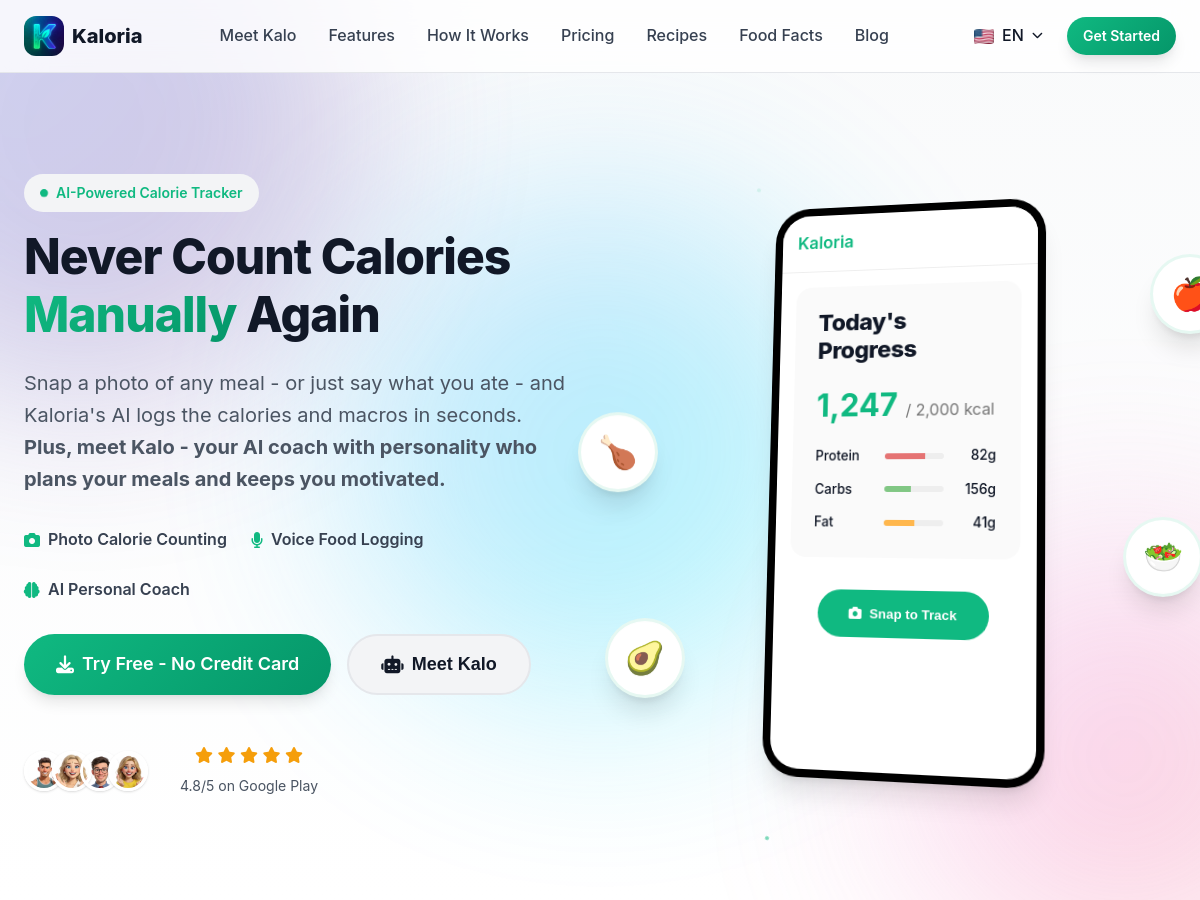
Screenshot of Kaloria - Calorie tracking
Kaloria - Calorie tracking
Calorie tracking Free

Kaloria is a free AI-powered calorie tracker and food diary that lets users log meals by taking a photo, speaking a voice description, or scanning a barcode. The app leverages artificial intelligence to identify foods instantly and estimate calories and macros, making manual tracking unnecessary. It supports over 40 languages and offers a variety of food items in its database, providing a globally accessible nutrition tool. The platform is especially tailored for mobile use, with a strong presence on Google Play where it maintains a 4.8-star rating. A distinctive feature of Kaloria is its personalized AI nutrition coach, which appears in four different personalities: Fitness Bro, The Roaster, Zen Master, and Science Nerd. Each coach has a unique tone and style, enabling users to choose the interaction that best fits their preferences. These AI coaches offer meal planning, recipe ideas, and motivational support, helping users stay on track with their health and fitness objectives. The app also includes macro tracking, daily progress summaries, and shareable achievement cards. The service operates on a freemium model, giving users access to core tracking features at no cost, with a 3-day Premium trial that unlocks additional capabilities. Kaloria provides a recipe hub and a food facts section on its website, complementing the mobile experience. As an AI-driven solution, it aims to simplify nutrition logging by removing friction and making the process as easy as snapping a picture or saying a sentence.

Solves

Manual calorie counting is time-consuming, error-prone, and often inconsistent. Kaloria solves this by using AI to automatically identify foods and estimate their calorie and macronutrient content from a photo, voice note, or barcode scan, allowing users to log meals in seconds. The integrated AI coach adds personalized guidance and motivation, addressing the engagement and adherence challenges common in nutrition tracking.

Screenshot of TaleRun
TaleRun
RPG storytelling Free

TaleRun is an AI-powered interactive storytelling tool listed in the RPG storytelling category on the AI tool aggregator There's An AI For That. It is offered for free and promises an experience where stories dynamically respond to user actions, implying a branching or generative narrative engine. According to its tagline, users 'step into stories that respond to your actions,' which positions it as a participatory fiction platform rather than a static reading experience. While detailed technical documentation, underlying language models, and customization features are not publicly disclosed on the listing page, the tool appears to target fans of role-playing games and interactive fiction. The free pricing and web-based accessibility suggest it is intended for casual users seeking immersive, choice-driven entertainment. Further specifics about story length, genre support, or community features are not available from the provided source.

Solves

TaleRun addresses the desire for dynamic, personalized storytelling by allowing users to influence narrative outcomes through their actions, transforming passive reading into an interactive, game-like experience.

Screenshot of Coval
Coval
AI Agents Unknown

Coval is a software tool designed for teams building AI agents that interact via voice and chat. It provides simulation and evaluation capabilities to test how agents perform in realistic conversations before they are released to users. The platform enables developers to create simulated user scenarios, run them against their agents, and measure key quality metrics. By focusing on both voice and chat modalities, Coval helps ensure that agents not only provide accurate responses but also deliver delightful user experiences. The tool is positioned for AI agent development workflows, aiming to reduce the risk of shipping agents that fail in production due to conversational errors, poor tone, or missed intents.

Solves

Coval addresses the challenge of shipping AI agents that may underperform in real user conversations by providing simulation and evaluation. It enables teams to test voice and chat agents against realistic scenarios, identify weaknesses, and iterate before production, ultimately improving user satisfaction and reducing costly failures.

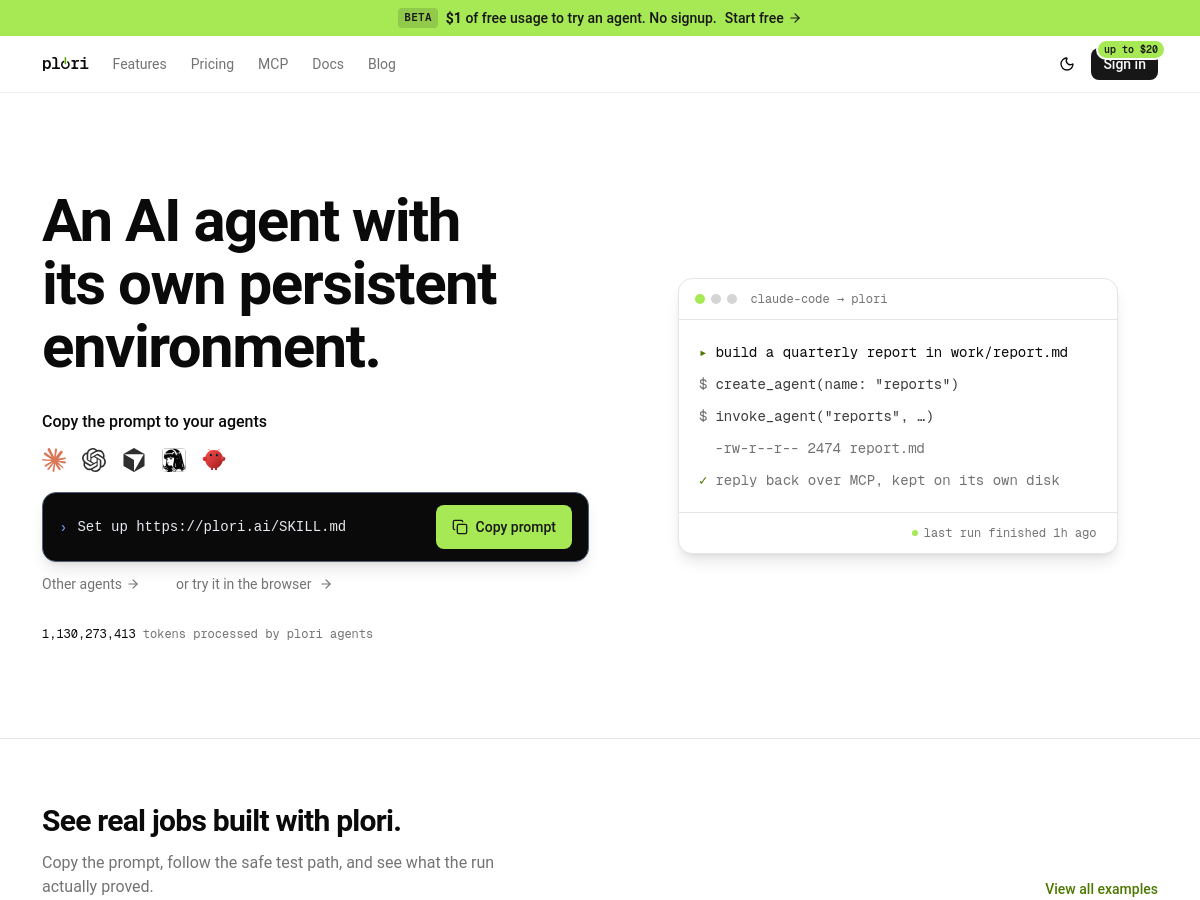
Screenshot of plori
plori
Agents Free

plori is a cloud AI agent service that provides each agent with its own persistent environment. According to its homepage, this environment includes a durable disk, real CLI tools, and memory, allowing an agent to keep state and files across interactions. It is designed to be used either directly in the browser or from an existing agent through the Model Context Protocol (MCP). The product targets workflows where an agent needs to perform long-running or stateful tasks. Users can point clients such as Claude Code, Codex, Cursor, or other MCP-compatible tools at plori, and the client can delegate a job and read back the result. The homepage describes starting long work like a test suite or migration, automating routines via schedules or webhooks, and publishing what the agent builds. plori also advertises a range of example jobs, including connecting Claude Code over MCP, running Node.js web services that scale to zero, researching X and Reddit conversations, writing SEO briefs, collecting webhook leads into Google Sheets, summarizing Telegram channels, monitoring X posts to Discord, and publishing X Articles. The service is in beta with a free trial offer of $1 of usage and no signup.

Solves

plori solves the need for AI agents to operate in a persistent, stateful cloud environment instead of a stateless session. It provides a durable disk, real CLI tools, and memory so agents can run long tasks, keep files, automate recurring work, and be delegated to from existing MCP clients without local setup.

Screenshot of Trag
Trag
Code Unknown

Trag is an AI-powered code review companion designed to assist developers by automating parts of the code review process. It likely integrates with version control platforms and uses machine learning models to analyze code changes, identify potential issues, and suggest improvements. The tool aims to reduce the burden of manual code reviews and improve code quality. Given limited public information, specific features and integration details are not fully documented.

Solves

Trag addresses the time-consuming and error-prone nature of manual code reviews by providing automated, AI-driven feedback on code changes, helping teams catch issues early and maintain high code quality.

Screenshot of DeskHub
DeskHub
AI/ML Unknown

DeskHub is a software tool positioned as 'The habit teacher for devs using GitHub.' It aims to help developers improve their work habits by analyzing their activity on GitHub, such as commit frequency, coding sessions, and contribution patterns. The tool likely uses AI/ML algorithms to identify behavioral trends and provide personalized coaching or recommendations. Because the official website is protected by a basic browser check and no detailed documentation is currently available, the exact feature set and user experience cannot be fully confirmed, but the core value proposition centers on habit formation for software developers through GitHub data. The tool's focus on GitHub suggests it may integrate with the platform to track developer activity and offer insights that encourage consistent, healthy coding routines. By treating GitHub usage as a behavioral dataset, DeskHub could help developers recognize patterns like irregular commit schedules, long gaps in activity, or overwork, and suggest actionable steps to build better habits. As the product is listed under AI/ML and has unknown pricing, it may be in an early stage or offered as a freemium service, but this remains unverified.

Solves

DeskHub addresses the challenge of developers who struggle to maintain productive and sustainable work habits, such as consistent commits, regular coding sessions, or balanced workloads. By analyzing GitHub activity, it aims to provide personalized feedback and guidance to help developers establish better routines and improve their long-term coding practices.

Screenshot of ImgLume
ImgLume
Image Gen Freemium

ImgLume is a web-based platform that serves as a curated gallery of text prompts for AI image and video generation. It focuses on prompts compatible with models like GPT Image, Nano Banana, and Seedance, enabling users to produce polished visual content from text descriptions. The platform provides browsing, copying, and remixing of prompts, along with sorting options by newest or popularity. Users can view prompt previews, see engagement metrics such as likes, and follow creators. Community features allow sharing and discovering trending prompts. ImgLume operates on a freemium model, offering basic browsing and generation features for free, with potential premium options. It aims to lower the barrier for creating high-quality AI-generated media by providing ready-made, tested prompts.

Solves

ImgLume solves the challenge of crafting effective prompts for AI image and video generation by providing a curated collection of successful prompts. It reduces trial-and-error and helps users quickly achieve desired visual results without deep expertise in prompt engineering.

Screenshot of Everest | AI Scheduling Assistant
Everest | AI Scheduling Assistant
Meeting scheduling Unknown

Everest is an AI scheduling assistant that manages multiple calendars and automates the meeting scheduling workflow. Users connect their Google and Outlook calendars, then simply CC Everest on an email thread where a meeting needs to be arranged. Everest proposes times based on live availability across all connected calendars, handles the back-and-forth negotiation over email, and books the meeting on the correct calendar—including sending the invite, rescheduling when plans change, and following up if there is no reply. Everest does not require inbox access; it only acts on threads where it has been explicitly CC'd and sends only short scheduling messages. The platform also offers a unified calendar view that brings together personal, work, and client calendars in one place. Users can toggle calendars on and off, switch between day/week/month/year/agenda views, and choose which calendar a new event goes onto. Everest prevents double-booking by mirroring commitments from one calendar onto other connected calendars as private busy blocks, without exposing event titles or details. It also remembers contacts' names, email addresses, and time zones from previous scheduling conversations, so future scheduling with the same people is faster and automatically accounts for their time zone. Everest is designed for people who juggle multiple calendars, client accounts, and professional contexts—such as consultants, freelancers, and busy professionals. It is currently offered as a hosted product with early access, and no public pricing information is listed on the website.

Solves

Manually scheduling meetings across multiple calendars is time-consuming and error-prone, especially when different clients and roles live on separate Google or Outlook calendars. Everest eliminates the email ping-pong by autonomously proposing times, negotiating, and booking meetings on the right calendar while keeping all connected calendars synchronized and preventing double-bookings.

Screenshot of Fotor | Vibe Marketing
Fotor | Vibe Marketing
Code Freemium

Fotor AI Vibe Marketing Platform is a comprehensive visual content creation tool designed for performance marketing. It enables users to transform simple ideas into high-converting product visuals, viral growth content, and complete marketing campaigns through an integrated AI-powered workflow. The platform is part of Fotor's broader design ecosystem, which serves over 800 million global users and processes more than 3 million images and videos daily. The platform offers two core modules: Product Visuals and Growth Visuals. Product Visuals includes features such as Product Shots, Virtual Model, Smart Listing, and Batch Workflow, allowing users to turn raw product photos into studio-quality shots, generate virtual models, and streamline large-scale image processing. Growth Visuals provides tools like AI Marketing Video, Link to Video Ad, AI UGC Avatar, and AI Brand Kit, enabling the creation of scroll-stopping social content for TikTok, Meta, and Instagram, automatic video ad generation from product URLs, authentic AI avatars with lip sync, and consistent brand styling across all assets. Fotor AI Vibe Marketing Platform emphasizes efficiency and cost reduction, claiming an 80% reduction in model shoot costs and significant time savings in post-production. It operates on a freemium model, with basic features available for free and advanced capabilities unlocked through paid plans. The platform is entirely cloud-based and requires no filming, editing, or technical expertise, making it accessible to marketers and business owners alike.

Solves

Fotor AI Vibe Marketing Platform solves the challenge of creating high-quality, on-brand marketing visuals and videos without the need for expensive photo shoots, professional editing skills, or extensive time investments. It automates the generation of product images, social media ads, and brand-consistent content, enabling businesses to quickly produce conversion-focused creatives for all marketing channels.

Screenshot of Habidu - Your AI Daily Coach
Habidu - Your AI Daily Coach
Productivity Free

Habidu is a free AI-powered daily coaching application designed to provide personalized guidance and accountability. It functions as a virtual coach that not only offers advice but also actively checks in with users to ensure they stay on track with their goals. The tool's core value proposition is its ability to follow up, making it more than a static advice generator. By leveraging conversational AI, Habidu engages users in daily interactions, helping them reflect on progress, overcome obstacles, and maintain motivation. The service is accessible via a web app, and its free pricing model makes it widely available. While specific technical details are limited publicly, the product is centered on behavioral change and productivity enhancement. This tool is especially useful for individuals seeking consistent support in building habits, managing tasks, or achieving personal milestones. It can act as a lightweight companion for daily planning and self-improvement, with the AI adapting to user responses over time.

Solves

Habidu solves the problem of staying consistent with personal goals by providing an AI coach that follows up daily, offering reminders, encouragement, and actionable advice to keep users accountable.

Screenshot of Quartz
Quartz
Model Serving Unknown

AI4Docs.AI is a multilingual AI medical scribe designed for healthcare professionals, with a focus on Arabic and over 100 other languages. It records patient conversations and automatically detects the spoken language, then generates structured clinical notes in the clinician's chosen output language, including full right-to-left Arabic formatting. The platform supports various note types such as SOAP, first visit, follow-up, medical report, referral letter, and dictation. The tool offers a four-input method that combines patient conversation audio, doctor's typed or dictated input, uploaded supporting documents (lab reports, imaging), and previous visit notes into a single generation. It also includes a WhatsApp integration ('Chat to Notes') that converts patient chat threads into clinical timelines, and an AI 2nd Opinion feature that provides ranked differential diagnoses, red flags, and evidence-based recommendations with citations to clinical guidelines. Generated notes can be saved directly to Google Drive, edited with voice or rich-text editor, printed with bilingual letterhead, shared as Word or link, or copied into any EMR. The service offers a free 20-note, 14-day trial without credit card, and works on computers, tablets, and phones via a web app.

Solves

AI4Docs.AI reduces the time clinicians spend on clinical documentation by automatically transcribing and structuring patient encounters in over 100 languages, including Arabic dialects. It eliminates manual note-taking and language barriers, enabling faster, more accurate medical records and freeing time for patient care.

Screenshot of OpenSEO
OpenSEO
AI/ML Unknown

OpenSEO is an open-source alternative to Ahrefs, providing SEO tools for backlink analysis, keyword research, site audits, and rank tracking. It aims to offer similar functionality without the high cost of proprietary SEO platforms. Users can self-host the application, giving them full control over their data and the ability to customize features. The project is community-driven and designed for developers and SEO professionals who require transparent and flexible SEO analytics. While still under development, it supports core SEO tasks and integrates with various data sources to deliver actionable insights.

Solves

Provides cost-effective, self-hosted SEO analytics as an alternative to expensive SaaS tools like Ahrefs, empowering users to perform backlink analysis, keyword research, and site audits without vendor lock-in.

Screenshot of AnySearch
AnySearch
AI Agents Unknown

AnySearch is a real-time structured search service tailored for AI agents and developers. It allows users to query the web and receive structured, machine-readable data, enabling integration into automated workflows. The service emphasizes low latency and high reliability, making it suitable for applications that require up-to-date information without the overhead of managing custom scraping or search infrastructure. By providing a straightforward API, AnySearch abstracts away the complexities of web search, allowing developers to focus on building intelligent systems that leverage real-world data.

Solves

It provides a reliable, real-time structured search API that enables AI agents and applications to access and process web data efficiently, removing the need to build and maintain complex search and data extraction pipelines.

Screenshot of Kilo Code v7 for VS Code
Kilo Code v7 for VS Code
AI Agents Unknown

Kilo Code v7 is an open-source extension for Visual Studio Code that provides AI coding agents to assist with software development. It introduces parallel agents that can work on different tasks concurrently, a diff reviewer to inspect and approve generated changes, and side-by-side comparisons of outputs from multiple AI models. The extension is designed to integrate with a variety of large language models, allowing developers to choose between cloud-based and local models. As an open-source project, Kilo Code emphasizes transparency and customizability. Users can configure model providers, adjust agent behavior, and review code diffs before applying them. The parallel agent architecture aims to improve productivity by dividing complex coding tasks across multiple autonomous agents, while the diff reviewer provides a safety layer for reviewing AI-generated modifications. Kilo Code v7 targets developers who want to incorporate AI assistance directly into their VS Code workflow without relying on a single vendor or model. It supports multi-model comparisons, enabling users to evaluate responses from different LLMs side-by-side and select the most appropriate solution for a given coding problem.

Solves

Kilo Code v7 addresses the inefficiency of using a single AI coding assistant by providing parallel agents, multi-model comparisons, and a built-in diff reviewer. It helps developers manage complex coding tasks, reduce context switching, and maintain control over AI-generated code changes within their existing VS Code environment.

Screenshot of Pazi
Pazi
Code Unknown

Pazi is a tool listed on ProductHunt with the tagline 'Vibe code business operations'. The term 'vibe code' suggests a low-code or natural language approach to programming. No additional information is available from the provided source, as the homepage content was inaccessible due to a security challenge. Therefore, specific functionality, pricing, and technical details are unknown. Pazi appears to be a software platform aimed at simplifying business operations through an intuitive coding methodology.

Solves

Pazi aims to address the complexity of managing business operations by offering a 'vibe code' approach, which potentially reduces the need for traditional coding skills. However, the exact problem it solves is not detailed in the available information.

Screenshot of Ecommerce | Hostinger
Ecommerce | Hostinger
E-commerce Unknown

Hostinger Ecommerce is a cloud-based online store builder offered by Hostinger, a global web hosting provider. It enables users to create a fully functional ecommerce website without coding, using drag-and-drop tools, pre-designed templates, and integrated payment and shipping options. The platform aims to simplify selling physical and digital products by centralizing product, inventory, and order management. The service supports multichannel selling, allowing merchants to list and sell products across their own website, social media platforms, and online marketplaces from a single dashboard. It includes features such as secure checkout, abandoned cart recovery, discount codes, and analytics. Hostinger Ecommerce also provides web hosting, domain registration, and SSL certificates, making it an all-in-one solution for small and medium businesses.

Solves

It addresses the challenge of setting up and managing an online store by providing a hosted, code-free ecommerce platform that combines website building, hosting, payment processing, and multichannel sales management. This reduces technical complexity and lets business owners focus on products and customers.

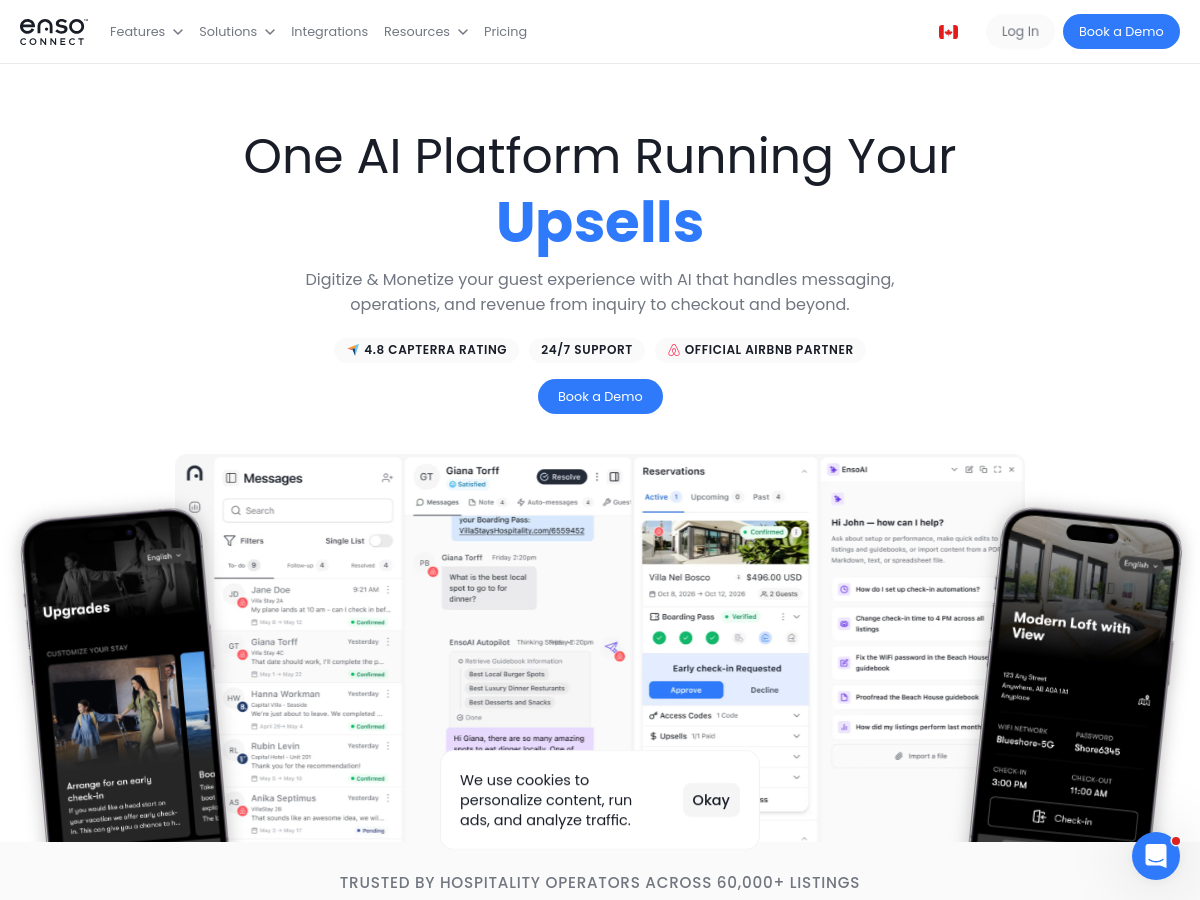
Screenshot of Enso Connect
Enso Connect
Hospitality Freemium

Enso Connect is a cloud-based guest experience platform built for short-term rental operators, vacation rental managers and boutique hotels. It combines an AI-powered messaging agent, a branded mobile guest app, contactless check-in, automated upsells and third-party integrations into a single workspace that runs the guest journey from inquiry through checkout and post-stay follow-up. The platform's AI chat agent answers common guest questions across channels, triages and routes messages, and can take actions such as sending check-in instructions or pushing an upsell offer. Property managers configure rules, templates and automations so repetitive communication and operational tasks are handled without manual staff involvement. A guest-facing web app provides digital guidebooks, check-in flows and service requests without requiring a native app download. Revenue features include automated upsell offers such as early check-in, late checkout, extra amenities and third-party experiences surfaced through Enso Experiences, which lets operators resell local activities and services for passive income. Smart lock integrations support contactless access, and the platform connects with common property management systems, channel managers and messaging channels. Enso Connect is sold as a freemium subscription with tiered pricing based on portfolio size and feature depth, and it is aimed at both independent hosts and multi-property management companies. The vendor markets itself on reducing response times, raising ancillary revenue per stay and lowering the operational load on front-desk and guest-services teams.

Solves

Short-term rental and boutique hotel operators handle a high volume of repetitive guest messages, manual check-in coordination and missed ancillary revenue opportunities, especially with small teams covering many properties. Enso Connect centralizes guest communication, automates check-in and answers with AI, and monetizes the stay through automated upsells, reducing staff workload and response times while increasing revenue per booking.

Screenshot of Brew
Brew
LLM Unknown

Brew is an AI-powered email marketing tool that positions itself as "Like Claude design for email marketing." It leverages large language models to help users create, refine, and design email marketing content, turning prompts into campaign-ready copy and layouts. The tool appears to target marketers and business users who want to quickly produce email campaigns without deep copywriting or design expertise. Although public details are limited, the tool's description suggests an emphasis on conversational AI assistance similar to Anthropic's Claude, applied specifically to email marketing workflows such as newsletters, promotions, and automated sequences. As a SaaS offering listed on Product Hunt, Brew likely operates through a web interface where users input goals, audience segments, or brand guidelines, and the system generates email subject lines, body copy, and possibly visual elements. Because pricing and technical specifications are not publicly disclosed, users should evaluate the tool through its official channels.

Solves

Brew solves the challenge of creating effective email marketing content quickly by using LLM-driven assistance, reducing the time and skill required to draft persuasive subject lines, email body copy, and associated design elements for campaigns.

Screenshot of Leania.ai for AI consultants
Leania.ai for AI consultants
Dev Tools Freemium

Leania.ai is a SaaS platform designed for AI consultants and automation agencies to win more clients by generating prospect-specific ROI evidence. It scans a prospect's public signals—such as job ads, tech stack mentions, and growth indicators—to map workflows, detect operational bottlenecks, and identify automation and AI opportunities. The scan produces a client opportunity file that includes a top issue, pitch angle, estimated time savings, and tailored discovery questions, all backed by evidence. Additional paid add-ons per client allow consultants to turn scan results into pitch decks, ROI evidence packs, and proposals. The platform also includes lead generation tools like an embeddable website widget and a Chrome extension for evaluating SaaS tool fit, helping consultants attract and qualify leads while building a data-driven sales pipeline. Plans start at $29 per month, with scalable options for growing consultancies.

Solves

AI consultants often struggle to differentiate themselves with generic pitches. Leania.ai solves this by automating the collection of prospect-specific operational data and translating it into quantified ROI estimates and actionable recommendations, enabling consultants to present compelling, evidence-backed proposals that resonate with clients and accelerate deal closure.

Screenshot of Context.dev
Context.dev
Dev Tools Unknown

Context.dev provides an API for scraping, enriching, and extracting data from the internet. It is designed to handle large-scale web data retrieval tasks by offering a unified interface. The service includes capabilities for structured data extraction from web pages, automated enrichment of scraped content, and efficient handling of anti-bot measures. While detailed technical documentation is not available, the tool is positioned as a comprehensive solution for web data extraction.

Solves

Context.dev simplifies programmatic access to web data by combining scraping, enrichment, and extraction into a single API, eliminating the need for separate tools and infrastructure.

Screenshot of WorkClaw
WorkClaw
AI/ML Freemium

WorkClaw is an AI platform that enables organizations to deploy autonomous AI teammates, called Claws, to assist with a wide range of tasks. Each Claw operates from its own cloud-based computer and can interact with users through existing communication channels like Slack, Microsoft Teams, and email. With a simple one-click setup, team members can create specialized Claws tailored to specific roles—such as marketing, support, or product management—without any coding. These AI coworkers are designed to collaborate not only with human colleagues but also with other Claws, forming a virtual team that automates complex workflows. Built on the OpenClaw framework, WorkClaw prioritizes security (SOC II compliance), ease of use, and deep customization. It integrates natively with over 3,000 applications, including Salesforce, Notion, Asana, and Google Workspace, allowing Claws to pull data, trigger actions, and update information across the tool stack. This seamless integration means that Claws can perform real work—scheduling meetings, updating CRM records, drafting content, and more—directly within the tools teams already use. WorkClaw is designed for collaboration at scale: Claws can be shared among team members, participate in group conversations, and even manage handoffs between each other. The platform's customizable nature allows organizations to tailor behaviors, skills, and access levels, ensuring that AI coworkers fit perfectly into existing workflows. With a freemium model that includes $100 in free credits and no credit card required to start, WorkClaw lowers the barrier for teams to explore and adopt AI augmentation without upfront investment.

Solves

Teams often struggle with repetitive tasks, information silos, and tool fragmentation, which slow down productivity and lead to burnout. WorkClaw solves this by providing AI coworkers that can be assigned to specific roles, automating routine processes, and integrating across apps to centralize operations. It reduces manual workload, improves cross-functional collaboration, and turns AI into a native, reliable part of the team.

Screenshot of StoreClaw
StoreClaw
AI Agents Unknown

StoreClaw is an AI-powered software tool designed to help online stores increase profits by using AI agents that are specialized in selling. It is listed on Product Hunt in the AI Agents category, with a tagline stating it can grow store profits with agents that know how to sell. The exact feature set and technical architecture are not publicly detailed in the available sources, which only include a Product Hunt redirect link and a placeholder homepage page. Pricing information is not disclosed, and no GitHub repository or open-source code has been identified for this product. Public details about StoreClaw's functionality, integration methods, and pricing are limited. The provided homepage content does not load normally and displays only a placeholder challenge page. No GitHub readme or open-source repository is available, so exact technical details cannot be verified. Based on its category and description, StoreClaw likely targets e-commerce store owners and operators looking to automate sales processes, improve conversion, and increase revenue with AI. However, without official documentation, these capabilities remain unconfirmed.

Solves

StoreClaw addresses the challenge of increasing online store profits by deploying AI agents that can engage customers and sell products, aiming to reduce the manual effort required for sales and improve conversion rates.

Screenshot of MemoryBase
MemoryBase
AI/ML Freemium

MemoryBase is a browser extension and companion web app that captures conversations from AI chatbots like ChatGPT, Claude, and Gemini, then turns them into a unified, searchable memory. It automatically labels and organizes chats, allowing users to browse by timeline or project. MemoryBase provides cross-LLM memory: users can move a chat from one AI model to another without re-explaining context, push conversations directly into coding environments such as Claude Code and Codex, and create context packs to control what each AI assistant knows. It supports import/export of chats and memory across integrated tools, with CLI and MCP integrations. Privacy features include local stripping of names, emails, and secrets before sync, end-to-end encryption, and one-click export or delete. The product is freemium: the free plan includes six months of chat history and basic views, while Pro at $9 per month billed annually adds unlimited history, unlimited context packs, agent integrations, and priority support.

Solves

AI assistants typically operate in isolation, so users must repeatedly provide the same background, preferences, and project context across different tools. MemoryBase solves this by capturing and organizing conversations from multiple AI tools into a single memory layer, enabling seamless context transfer and reducing repetitive explanations.

Screenshot of PollyReach
PollyReach
AI Agents Unknown

PollyReach is a service that enables developers to give their AI agents a real phone number and a synthetic voice, allowing the agents to make outbound voice calls. By integrating with PollyReach, an AI agent can combine natural language processing with telephony, turning text-based interactions into human-like voice conversations. The platform handles the complexity of telephony infrastructure, voice synthesis, and call management, so developers can focus on the agent's conversation logic. The core offering includes provisioning of real phone numbers (likely from a pool of local or toll-free numbers) and high-quality text-to-speech engines that generate natural-sounding speech. The agent can initiate calls, deliver scripted or dynamic messages, and possibly handle simple two-way interactions through speech recognition or DTMF tones. This bridges the gap between conversational AI and traditional phone communication. Typical implementation involves an API where a developer can trigger a call by providing a recipient number, the message or dialogue flow, and the speaking voice. PollyReach would then place the call, convert the message to speech, and execute the call. Some advanced features might include call status tracking, webhooks for events, and the ability to handle multiple concurrent calls. The service is designed to be language and framework agnostic, integrating with popular AI agent platforms or custom-built solutions. PollyReach is positioned as a plug-and-play telephony layer for AI agents, eliminating the need to negotiate carrier agreements, set up SIP trunks, or manage voice synthesis infrastructure. It targets use cases ranging from automated outbound notifications to fully interactive voice agents for customer service or sales. The emphasis on a 'real number' suggests the ability to present a recognizable caller ID, improving answer rates and trust.

Solves

AI agents are typically confined to text-based channels like chat or email, which limits their reach to users who prefer or rely on phone communication. Organizations wanting to automate phone calls must manually integrate telephony APIs, manage voice synthesis, and maintain telecom infrastructure. PollyReach solves this by providing a single API that gives any AI agent a real voice and phone number, enabling it to instantly make calls without the overhead of telephony integration.